

The 5 best cameras with CCD sensors for a cinematic look
In a world where today’s cameras seem designed to impress with their specifications (8K, super-fast bursts, a huge number of focus modes, and film simulations tailored to the algorithm of the social network of the moment), there are those who are looking for something else. It’s not about nostalgia, but a clear and defined intention: images with texture, with nuances, with colors that don’t look like they’ve been rendered by AI, and above all, trying to achieve that film look without having to process the image, but rather the opposite, being able to practice SOOC, or Straight Out Of Camera, that is, getting the image we want directly from the camera, without editing.
That’s where CCD sensor cameras come back into play. They’re not fast, they’re not the most sensitive in low light conditions, and they certainly won’t offer you the latest technology. But they have one thing that many of us miss: personality. Colors that don’t need correction to look real, shadows with useful information, and a look that, without simulating film, often reminds us of it more than any Lightroom preset.
This article is designed to help you choose a camera with character that will bring a unique aesthetic to your images. Let’s get started.
1. Nikon D200
Sensor: 10.2 MP APS-C CCD (23.6 × 15.8 mm)
Year of release: 2005
What it was in its day, and why it is still viable today
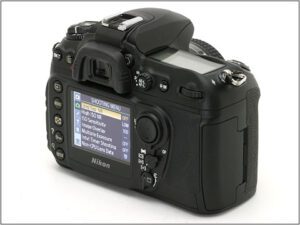
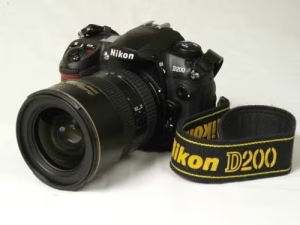
The D200 was not a revolutionary camera, but it was a very well-built piece of equipment at the time. A sealed magnesium alloy body with accessible physical controls and a reliability that made it a trusted companion for many press and nature photographers. Today, although surpassed in many technical areas, it still stands out for one clear reason: its CCD sensor produces some of the best colors ever seen in a digital SLR.
Ergonomics and real handling
When you hold a D200 for the first time, the first thing you notice is that it doesn’t try to look small or lightweight. It is a “serious,” solid camera with a deep grip and direct access buttons for ISO, white balance, metering mode, and image quality. There is no need to enter any menus to adjust the important settings. And the front and rear dials have that satisfying click you expect from a tool designed to last.
The optical viewfinder has good coverage (95%) and offers a clear, unadorned experience. The rear screen, however, is small (2 inches) and has modest resolution, but it’s sufficient for checking exposure and histogram. The interface is consistent, and anyone who has used a Nikon since 2000 will feel right at home.
Image quality
What makes the D200 a sought-after camera today is not its megapixels or shooting speed. It’s the color treatment. The CCD sensor, combined with Nikon’s image engine at the time, produces natural colors, with particular richness in skin tones, greens, and skies. Tonal transitions are smooth, without the exaggerated microcontrast seen in many modern RAW files.
And as I said before, it’s not a matter of nostalgia: there are photographers who still use it today precisely because they achieve that look with less post-production.
Technical limitations
It doesn’t record video, the ISO is usable up to 800, and any mobile phone today looks much better than the rear screen of this camera. The autofocus is acceptable for its time (Multi-CAM 1000 with 11 points), but limited if you’re coming from a modern mirrorless camera. Even so, it’s still perfectly functional for still photos and portraits.
2. Pentax K10D
Sensor: 10.2 MP APS-C CCD
Year of release: 2006
Pentax, when it was Pentax
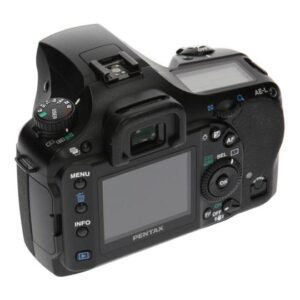
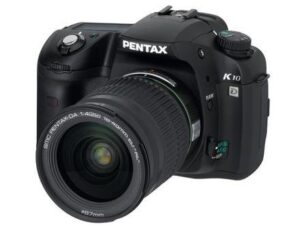
At the time, the K10D was Pentax’s bid to compete with Nikon and Canon in the semi-professional range. And it didn’t just come with good construction: it was one of the first SLRs to include stabilization in the body (yes, a stabilized SLR), weather sealing, and a quality pentaprism viewfinder. Although Pentax is nowhere near what it used to be today, this model is still a gem if you’re interested in the CCD look and a complete photographic experience.
Body and controls
The K10D has a clean and robust design. It’s not light (about 790 g with battery), but that helps stabilize it in your hand. The grip is comfortable, with well-placed buttons, two control dials, and a physical selector for customizable modes. Access to ISO, white balance, AF mode, and exposure compensation is direct, without the need to search through menus.
The rear screen is 2.5 inches with 210k dots, just enough but functional. The menu is more sober than on Nikon or Canon, but intuitive. The viewfinder, on the other hand, is a bright pentaprism with 95% coverage and 0.95x magnification, well above the average for its time (and still usable today).
Image and color
This is where this camera really shines. The K10D’s CCD, combined with Pentax’s PRIME engine, offers smooth, balanced color with a very “photographic” profile. There is no oversaturation or artificial contrast. It performs particularly well in RAW: the files are malleable, with no tendency to overexpose highlights. Many photographers agree that skin tones and greens are particularly pleasing.
It also performs well in direct JPEG, although it is in RAW that its capabilities can be best exploited. The dynamic range is not surprising in terms of figures (around 10 stops), but the way it falls in shadows is progressive, which makes it more usable.
Things to keep in mind
The autofocus has 11 points, which is slightly slower than the Nikon D200, but quite usable under normal conditions. The ISO is quite usable up to 800, although at 1600 you can get acceptable images with noise reduction. The stabilization in the body allows you to shoot at slower speeds without a tripod, which partly compensates for its low-light performance.
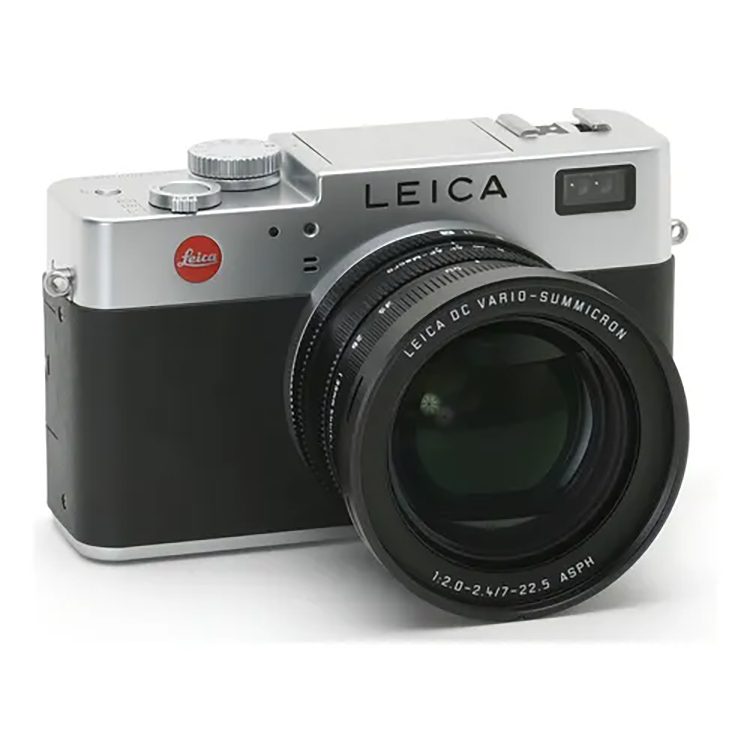
3. Leica Digilux 2
Sensor: 5 MP CCD (2/3”)
Fixed lens: Leica Vario-Summicron 28–90mm f/2–2.4
Year of release: 2004
Leica when it did strange things
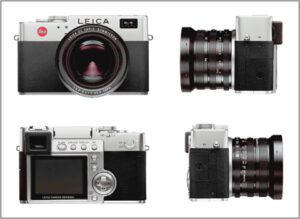
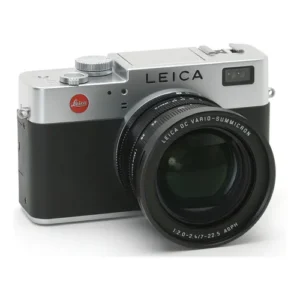
The Digilux 2 was an experiment by Leica with Panasonic. A compact digital camera, but with manual controls, a design reminiscent of the Leica M, and a built-in lens that is still considered one of the best ever mounted on a compact camera. And most surprising of all: a CCD sensor that, with only 5 MP and slightly larger than mobile phone sensors, nevertheless produces photos that are perfectly usable today.
Feel in your hand
The body is made of magnesium alloy, with a clean and sober design, as is typical of Leica. It has a physical dial for speed, controllable aperture from the lens, and manual focus with a real distance ring. It feels like an analog camera, both in operation and response. The electronic viewfinder is old (235k dots), but sufficient for composing. The rear LCD screen is 2.5 inches and works well outdoors.
There is no RAW, only JPEG. But the JPEGs that come out of this camera have a character of their own: warm color, restrained contrast, just the right amount of sharpness. And the lens, a bright Vario-Summicron, delivers sharpness from f/2 and soft bokeh in portraits.
And the limitations?
Everything. It’s slow, the autofocus is sluggish, there’s no video, no stabilization. But that doesn’t matter if you know what you’re looking for: a leisurely shooting experience with unique results.
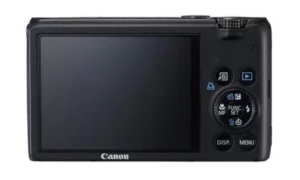
4. Canon PowerShot S95
Sensor: 10 MP 1/1.7″ CCD
Year of release: 2010
Canon’s serious compact
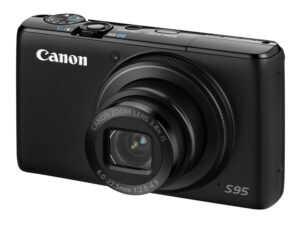
The S95 was one of the first compact cameras to offer full manual control, RAW recording, and a bright f/2 lens in a pocket-sized body. It wasn’t a professional camera, but many photographers used it as a second everyday camera. Today, its CCD sensor is still sought after by those who want that “filmic” look that many modern cameras have lost.
Build and usability
The camera is very small, fitting in a jacket pocket. It has a configurable front ring that can control aperture, ISO, or exposure compensation. The interface is simple, and although the rear screen is not touch-sensitive, it responds quickly. The body is plastic but well-assembled, with a clean, understated design.
Image quality
Despite having a small sensor, the CCD performs well in normal lighting conditions. Colors are soft, the automatic white balance is usually reliable, and RAW allows for precise adjustments. The lens, a 28–105mm f/2–4.9, is sharp in the center and quite decent in the corners up to 70mm.
In low light conditions, the maximum usable ISO is around 400; beyond that, noticeable chromatic noise appears. Even so, for portraits, street photography, or personal use, it offers a warm, natural image that is difficult to achieve with current mobile phones.
And finally… a video camera
5. Sony DCR-VX1000
Sensor: 1/3” triple CCD
Year of release: 1995
Format: MiniDV
The standard for indie video in the 1990s
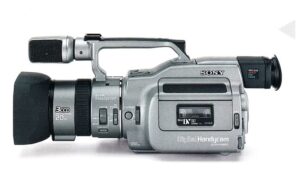
The VX1000 was revolutionary. It was the first MiniDV camcorder with professional optics, triple CCD sensor, and manual controls. And although today it only records in SD (720×480), its image remains iconic. If you’ve seen skate videos, alternative band clips, or experimental films from the late 90s, you’ve probably seen what this camera is capable of.
Handling and feel
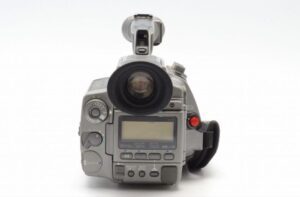
It’s not light or small. It’s brick-shaped, with a motorized zoom, manual focus wheel, audio inputs, and gain, exposure, and shutter controls. The viewfinder is electronic, with a monochrome screen. There is no rear LCD screen. It records to tape and captures via FireWire. Everything is physical, manual, and quite slow. But that’s part of the charm.
Aesthetics and current use
What this camera produces is unmistakable: saturated color, soft blacks, and a texture reminiscent of high-quality VHS. There are no simulations or filters that can fully replicate it. That’s why it’s still sought after for music videos, experimental pieces, and campaigns with a lo-fi aesthetic.
What conclusion can we draw?
There is no “best” camera on this list. They all have significant technical flaws, but they all offer something that is hard to find today: an image with its own character, with a unique aesthetic from the moment you shoot. If you are willing to work with these limitations, you will discover that often these limitations are what force you to think more carefully about each photo.
Want a solid, reliable SLR with Nikon color? Nikon D200.
Prefer something more alternative, with stabilization? Pentax K10D.
Looking for the Leica experience without emptying your wallet? Digilux 2.
Compact with RAW and a soft filmic look? Canon S95.
Or maybe you prefer retro video without LUTs or simulations? Sony VX1000.
They all have something to offer. None of them try to impress with their features, and they all force you to think before you shoot… which is no small thing.
What if you still want the filmic look but with a modern camera?
The closest and simplest option is Fujifilm with its film simulations, which allow you to get retro looks straight from the camera, without editing.
The latest: FUJIFILM X-E5 + FUJINON XF23MM f2.8 R WR: VER PRECIO
More affordable: FUJIFILM X-M5: VER PRECIO
The best of the brand with a retro design, dials, buttons, and selectors: FUJIFILM X-T5: VER PRECIO