Revisiones de Productos

Vintage lenses in 2025 — Do They Still Have a Place? 1024 683 EFEIGHT.com
EF87117

Vintage lenses in 2025 — Do They Still Have a Place?

Exploring the world of vintage lenses on full-frame mirrorless cameras is an experience that goes far beyond nostalgia: it’s about integrating the best of both worlds—the charm and optical personality of the past with the precision, flexibility, and ease of use of contemporary digital technology. Mounting these classic lenses on bodies such as the Sony A7, Nikon Z, or Canon R is not only perfectly possible using adapters, but also expands the creative palette of any modern photographer or videographer.


EF87117

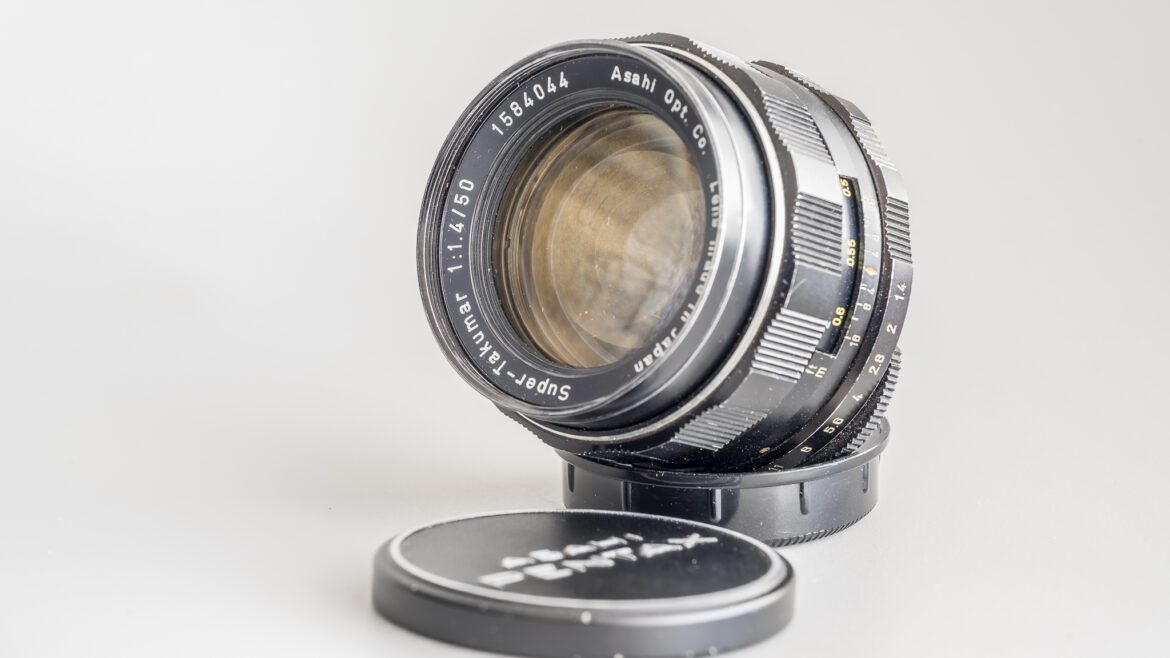
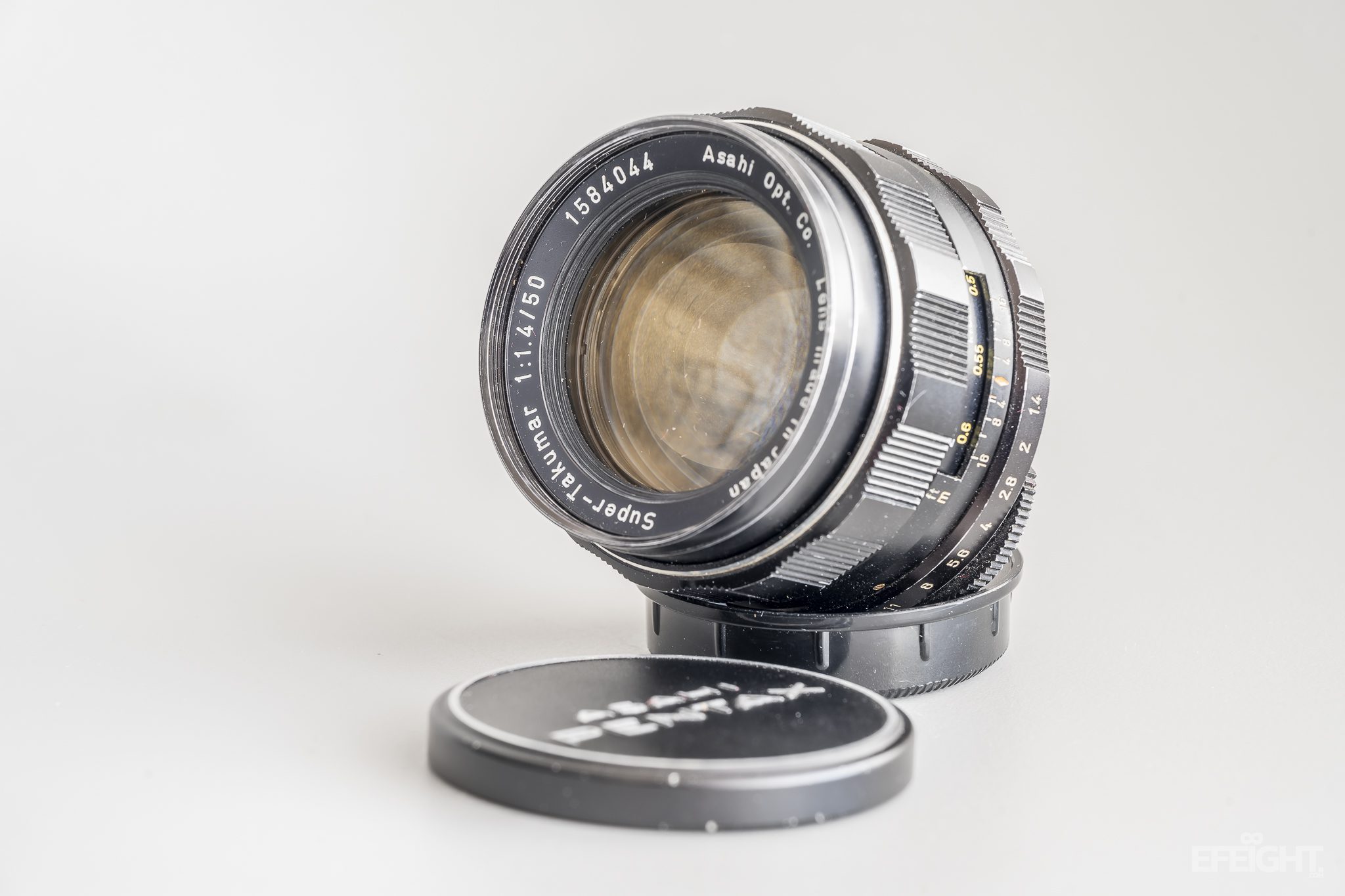
Asahi Pentax 50mm f/1.4 (8 elements)
Manufactured in Japan between 1964 and 1967 by Asahi Optical, this 50mm M42 lens became legendary, especially for its limited series with “8 elements” and its f/1.4–f/16 brightness. Originally designed for Pentax Spotmatic cameras, today, adapted to mirrorless cameras, it offers delicate rendering, creamy bokeh, and a soft “glow” at maximum aperture, ideal for portraits and artistic video. The combination with full-frame sensors allows you to take advantage of its full coverage and character: soft colors and natural focus blur distinguish it from any modern lens.


EF87116

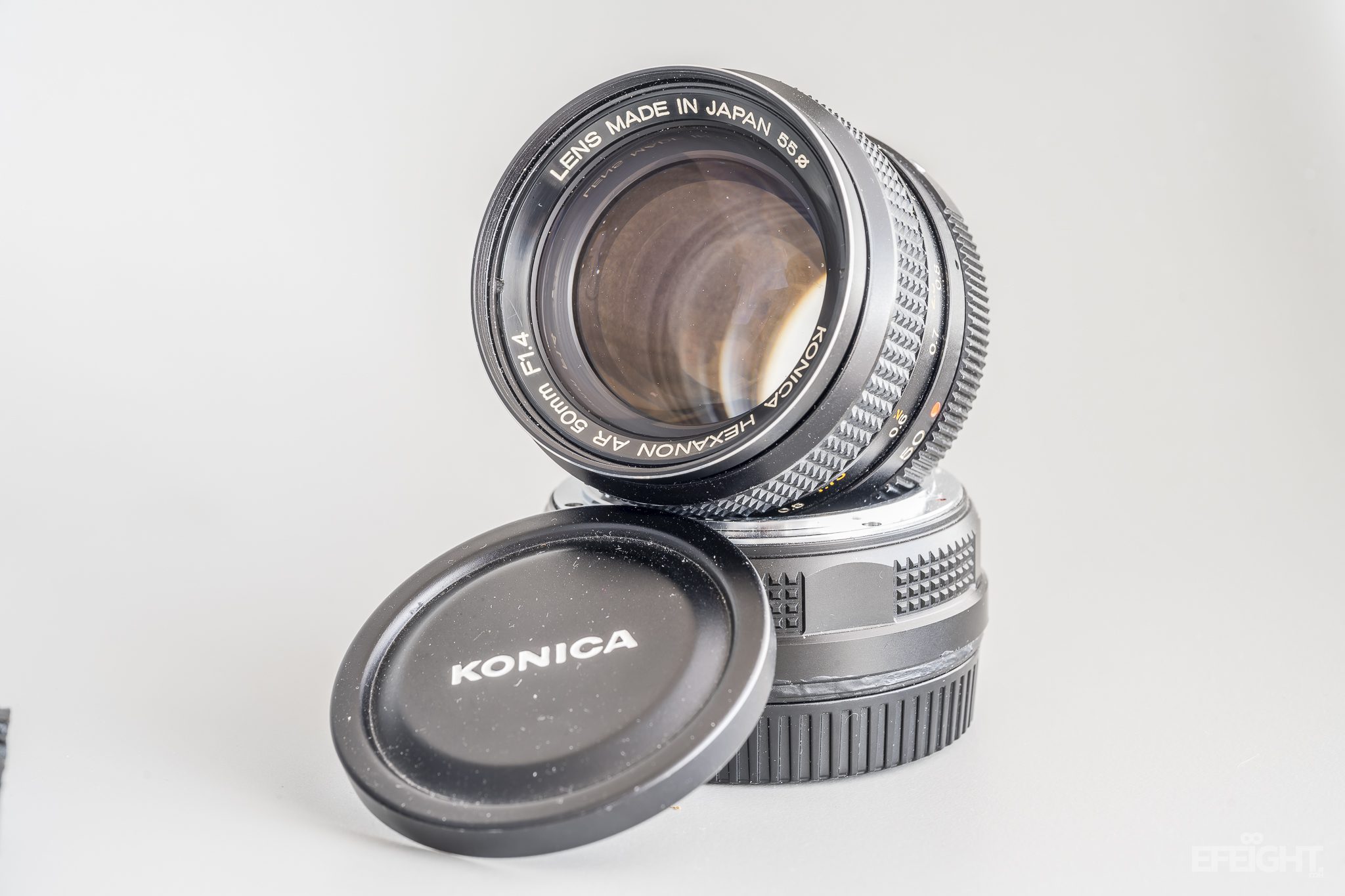
Konica Hexanon 50mm f/1.4
This Japanese lens from the 1973-1987 era, with a Konica AR mount, was designed for Autoreflex T3 cameras and similar models. With 7 elements in 6 groups, a maximum aperture of f/1.4 and a minimum aperture of f/16, it is known for its sharpness and depth of color. When used on a full-frame mirrorless camera, it gains its full range of coverage, managing natural vignetting and smooth focus transitions, making it excellent for environmental portraits, interior photography, and low-light scenes, where faithful color reproduction and vintage aesthetics make all the difference.


EF87119

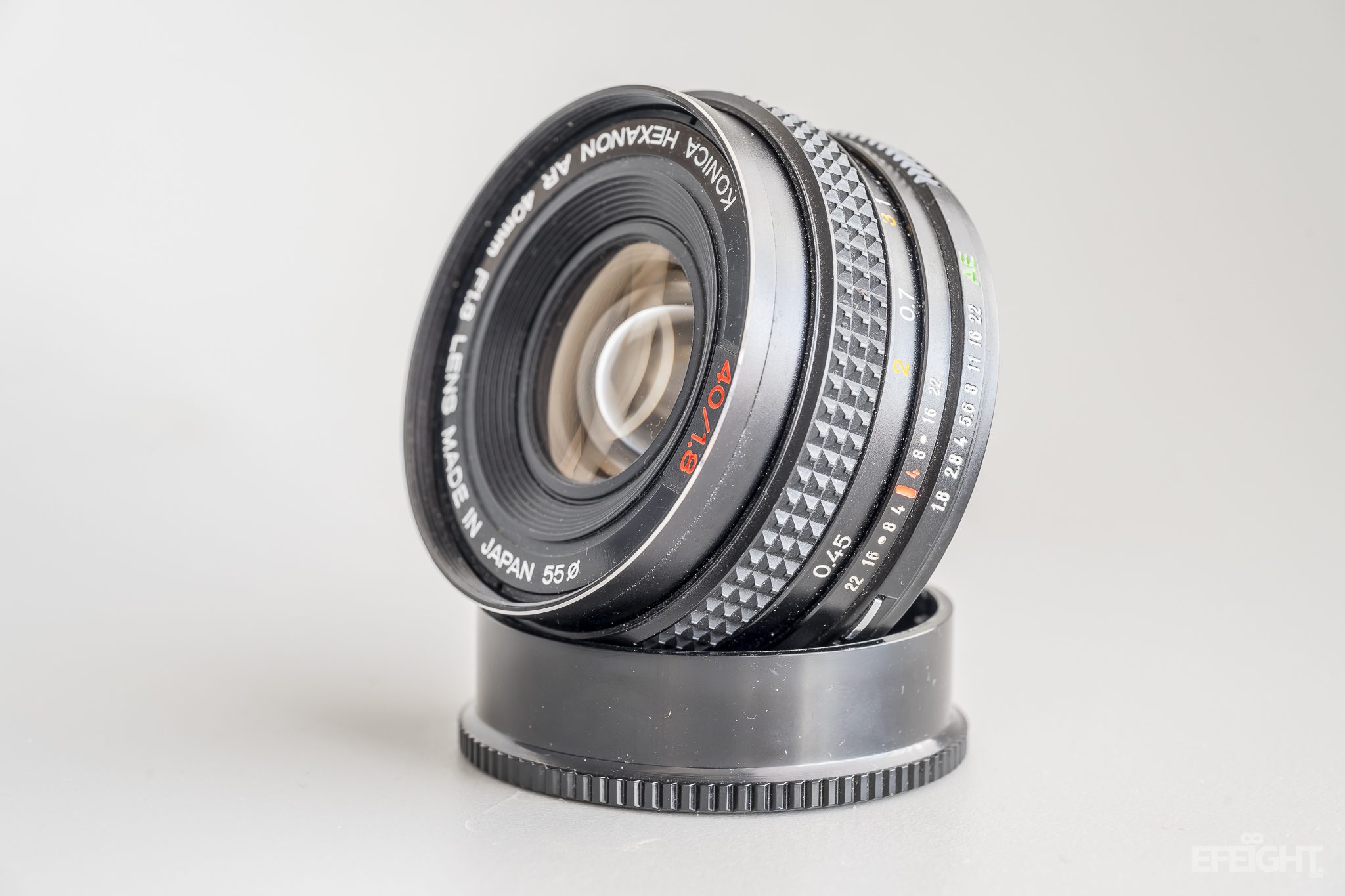
Konica Hexanon 40mm f/1.8
Introduced between 1978 and 1982 for Konica AR cameras such as the FS-1, this “pancake” lens is renowned for its compactness and 6-element, 5-group optics (aperture f/1.8–f/22). In a full-frame mirrorless environment, it is perfect for street photography and travel: its size makes it almost invisible, but it delivers outstanding sharpness from medium apertures and very natural color. Manual focusing is agile and the shooting experience is discreet, portable, and extremely effective for capturing urban life with a distinctive character.


EF87123

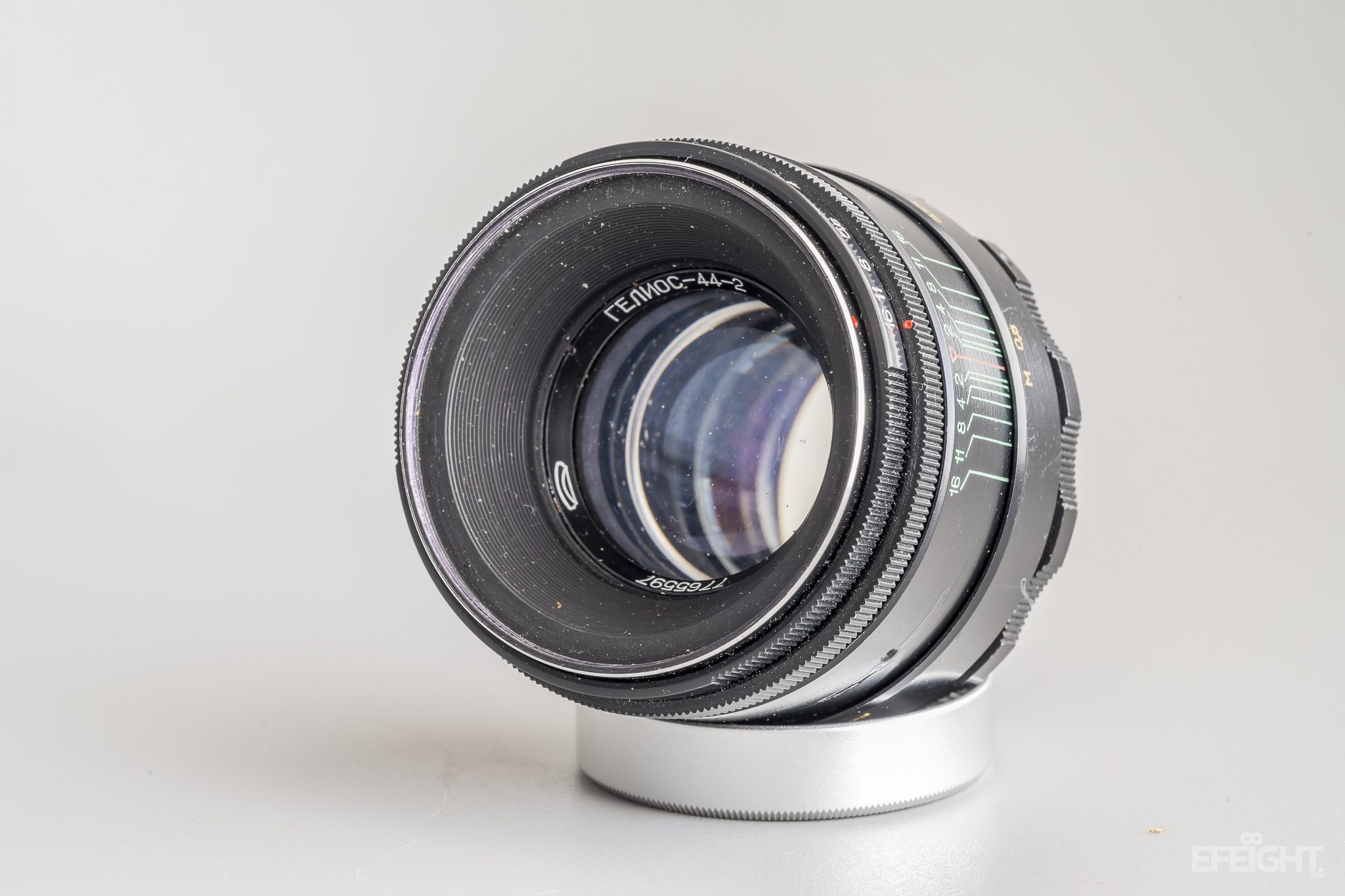
Helios 44-2 58mm f/2
A Russian classic manufactured since the 1970s by KMZ and others, with an M42 mount, derived from the German Biotar. It offers 6 elements in 4 groups and an aperture of f/2–f/16, designed for Zenit E cameras. Its fame is due to its “swirly bokeh,” a special circular blur that provides a dreamlike and unique aesthetic. On a full-frame mirrorless camera, its field of view and blur are fully preserved, delivering artistic portraits and videos with unpredictable atmospheres and a unique sense of depth. It is especially appreciated for creative photography and experimental shoots.


EF87120

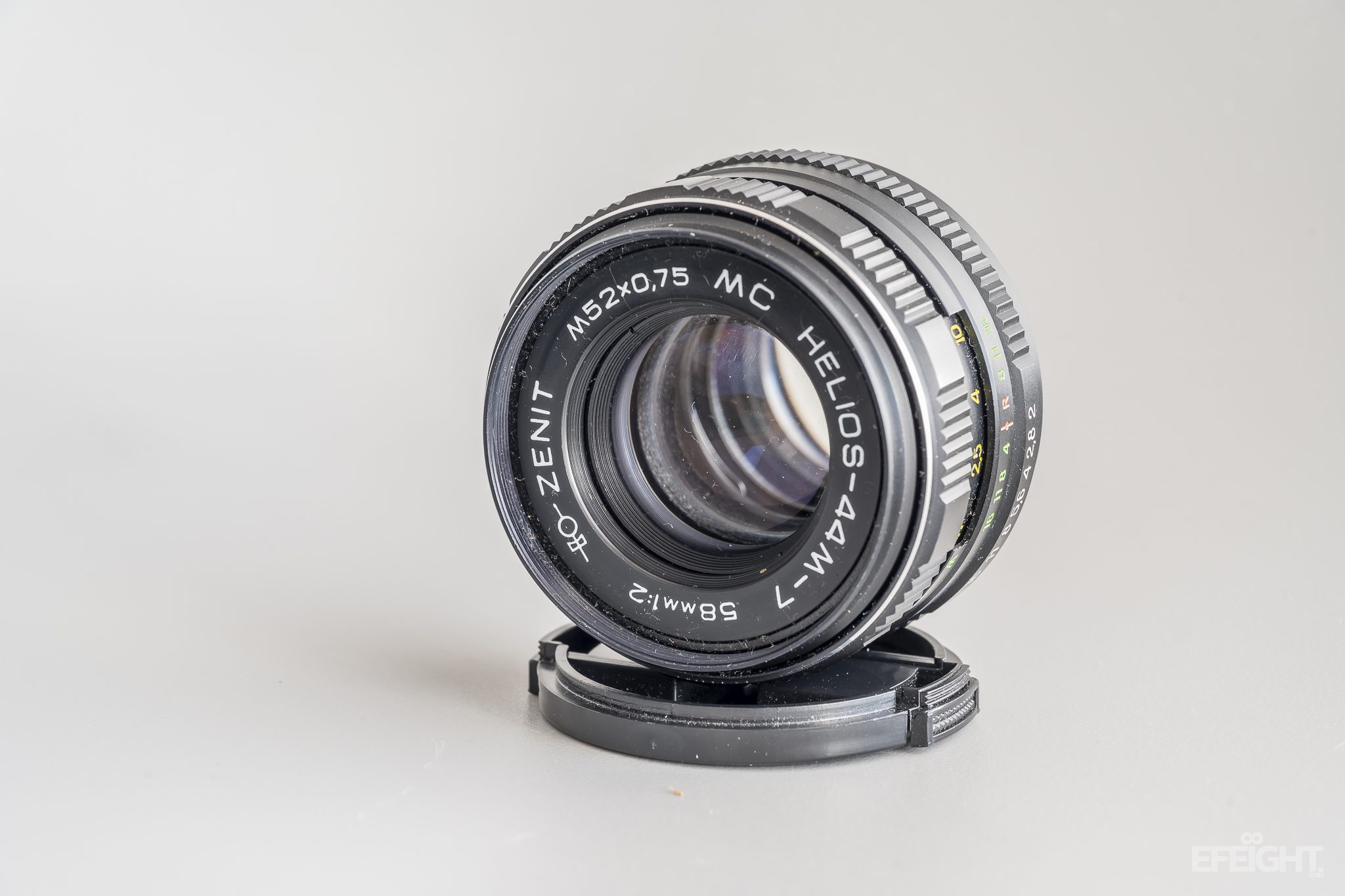
Helios 44-7 58mm f/2
An evolved version from the late 80s and 90s, also for Zenit with M42 mount, it retains the swirly bokeh qualities and optical design of the 44-2. Mounted on a modern mirrorless camera, it offers more refined reproduction, slightly less flare, but the same visual identity. It lends itself to imaginative portraits and music videos where the aim is to differentiate the work with a surreal and vintage touch, while maintaining adequate performance from f/2 to f/8.


EF87130

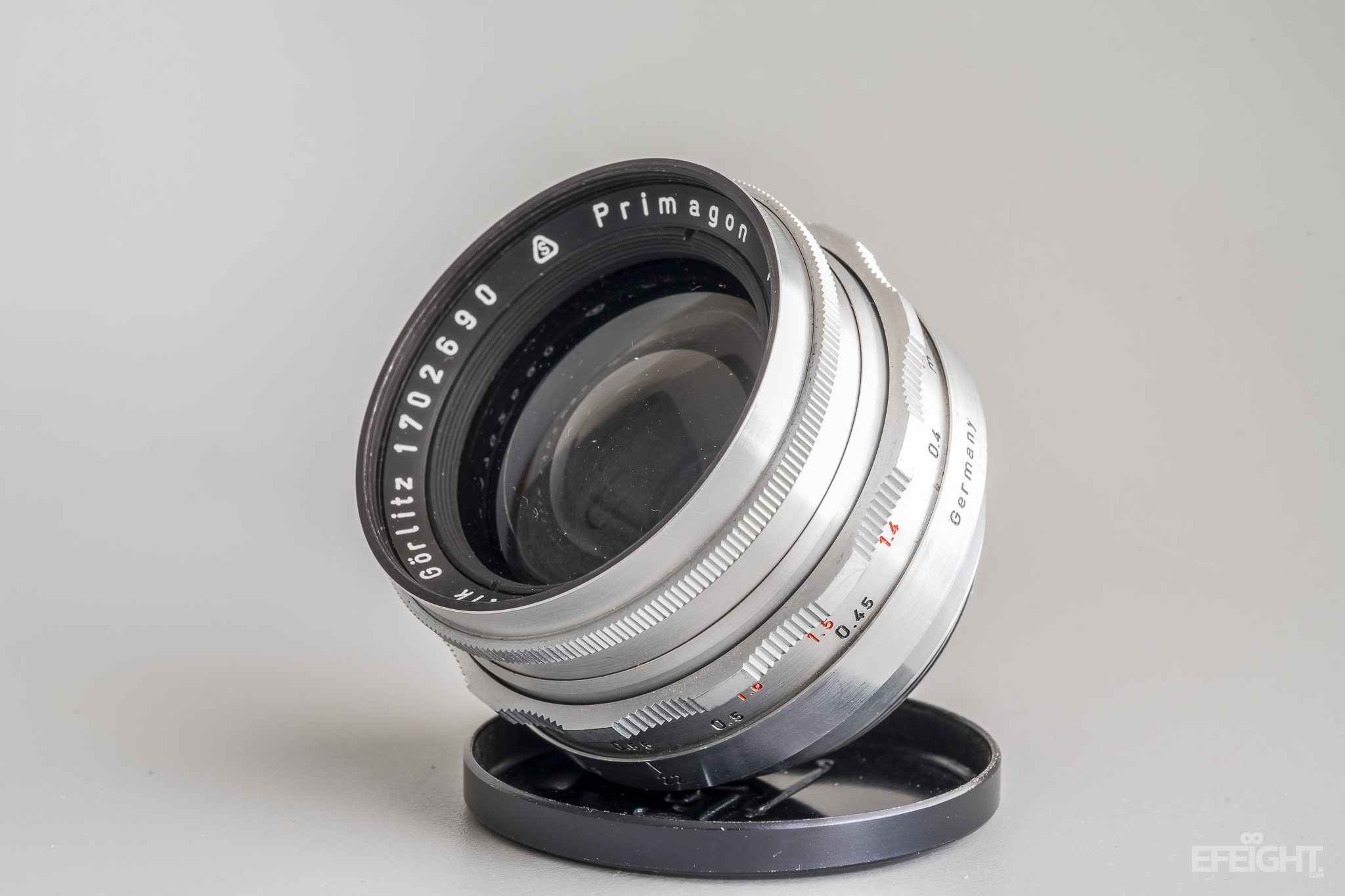
Meyer Optik Primagon 35mm f/4.5

Manufactured in East Germany from 1956 to 1963 for Exakta and M42 cameras, this slow wide-angle lens (f/4.5–f/22, 4 elements/4 groups) was renowned for its sharpness and low distortion. Adapted to full-frame mirrorless cameras, it brings back a classic feel to landscape, architecture, and interior photography, with neutral colorimetry and slight vignetting that enhances open scenes. Perfect for leisurely work where precision and detail, rather than brightness, are the priority.


EF87124

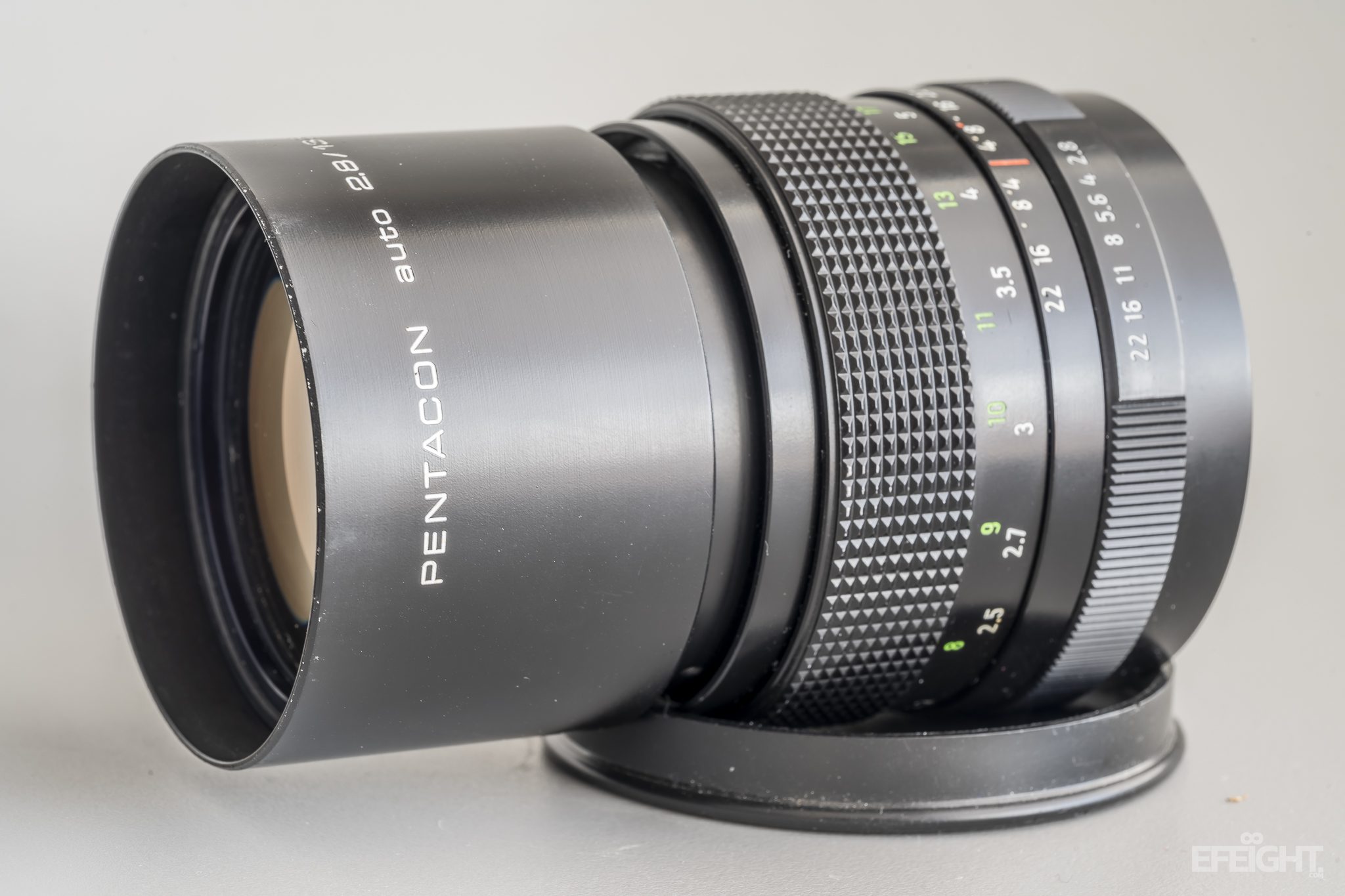
Pentacon 135mm f/2.8

Originating in East Germany (1960s to 1980s), this M42 telephoto lens (also Prakticar B version) is designed with 5 elements in 4 groups, covering an aperture from f/2.8 to f/22. Its classic use was for portraiture and nature photography with Praktica or Pentacon cameras. When mounted on full-frame mirrorless cameras, its “bokeh monster” shows its full potential: it achieves a very smooth compression of planes and blurring, very popular in outdoor portraiture and video, also offering warm colors and a sense of “old atmosphere.”


Real-world uses in 2025

Music videos and short films: Independent cinematographers mount Helios or Pentax lenses on digital cinema cameras (Blackmagic, Sony A7, etc.) to achieve ethereal atmospheres and highlight protagonists, exploiting distinctive flares and blurring.

Wedding and portrait photography: The Pentacon 135 or Konica 50 1.4 are selected to achieve a soft, nostalgic look in couple shoots, taking advantage of their ability to naturally separate the subject from the background.

Artistic urban photography: Travelers seeking to capture the essence of cities turn to the Konica 40 1.8 for its discretion and sharp optics, perfect for creating intimate and unique images, far from the digital perfect.

Vintage astrophotography: Enthusiastic users adapt old lenses, such as the Pentax 50 1.4 or the Helios 44-2, to explore the deep sky and capture stars with a tone and blur that modern digital sensors cannot replicate.

Creative macro: Some photographers use extension tubes with these lenses for artistic macro photography of flowers or textures, achieving results that differ from today’s dedicated macro lenses.

452296337 1455705358413126 1608501061887262806 n

Pentacon 135mm

420894716 686835283625812 3339007519830864674 n

Konica 50mm f1.4

451356946 1186495629031638 1805066797781383533 n

Asahi Pentax 50mm f1.4 8 Elem.

If you’re still not convinced after reading this article, I can assure you that using vintage lenses on modern full-frame cameras allows you to discover a wide range of visual effects, textures, and emotions that are impossible to replicate with contemporary optical engineering. These lenses bring history, soul, and originality to today’s digital photography and video, proving that their practicality transcends mere collectability: they are tools that are highly relevant in creative exploration.
Ten years later, SONY revamps this camera. 1024 591 EFEIGHT.com
Sony RX1R III feat 1300x750 1 e1752744423562

Ten years later, SONY revamps this camera.

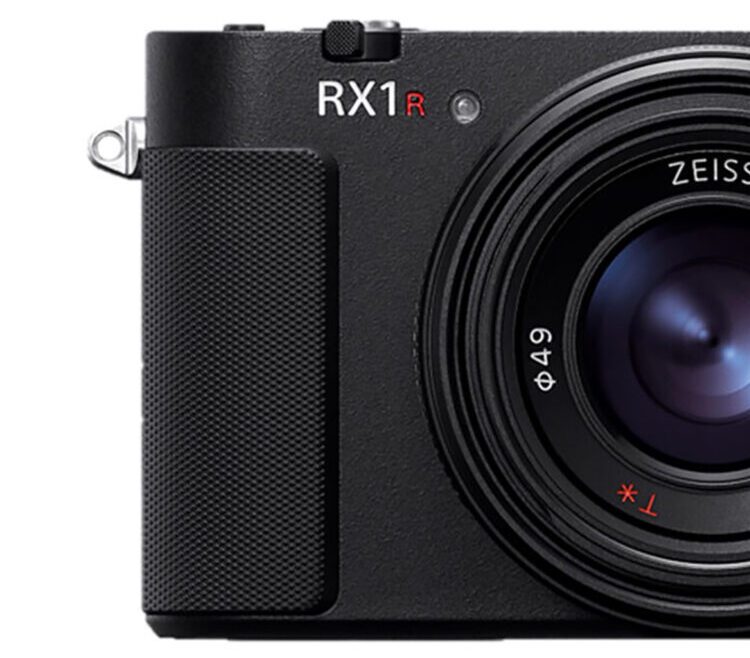
Sony has unveiled a third generation of its high-end compact camera, the RX1R III, ten years after its predecessor, the RX1R II, was released in 2015. At first glance, this update maintains the same compact structure and continues to feature a stylish fixed lens, but now incorporates a 61-megapixel sensor, improved image processing, and enhanced focusing.

Sony RX1R III feat

The sensor is still a back-illuminated Exmor R full-frame type, without a low-pass filter and with anti-reflective coating, mimicking the configuration of the A7R V. This decision translates into very high image quality and a dynamic range of up to 15 stops (according to Sony), a notable feature for those seeking sharpness and detail without compromise.

The brain that processes this data is the BIONZ XR, crowned with an artificial intelligence chip that facilitates a hybrid autofocus system with 693 PDAF points and advanced recognition of eyes, bodies, and even vehicles. It is a clear heir to what the A7R V offers, but in a smaller body.

The lens chosen is still the classic 35mm f/2 Zeiss Sonnar T*, a choice that has become iconic thanks to its resolution and character. This version adds the ability to shoot in minimum macro mode at 20 centimeters (0.26×) and an electronic cropping function—called “step crop”—that allows you to simulate focal lengths of 50 mm (29 MP) and 70 mm (15 MP). All this, of course, without changing lenses, maintaining the operational simplicity that defines the model. This is a trend we have also seen in Fujifilm’s latest compact cameras.

In terms of handling, the camera retains its small dimensions—113 × 68 × 75 mm and weighing about 498 g—with a magnesium alloy body, controls aligned with Sony’s modern aesthetic, and a more consistent grip. However, the OLED viewfinder has 2.36 million dots and the screen also has the same resolution as its predecessor, and it is also a fixed screen, a decision that saves space but limits ergonomics at low angles and is sure to put off many photographers and content creators who will not be able to take advantage of a reversible screen, or even a tilting screen to shoot comfortably at high or low angles. Simplicity comes at a price.

For hybrid photography, the RX1R III offers 4K recording at 30 fps with 10-bit color depth, and Full HD at 120 fps. It also includes 12 “Creative Looks” profiles and the popular S-Cinetone, sought after by those who appreciate a cinematic aesthetic without post-processing.

The price will exceed $5,000, a significant figure that places it in the range of high-end compacts such as the Leica Q3 and medium-format cameras such as the Fujifilm GFX100RF. This means that, although it offers top-notch performance for its category, it also competes directly with more versatile systems and interchangeable lenses.

Among its great virtues are outstanding image quality with extreme resolution in a portable body, immaculate focus with intelligent tracking, focal crop versatility, and advanced video profile. But there are some sticking points: the absence of IBIS stabilization, a modest battery life of around 300 shots, a fixed viewfinder and screen, and a price tag that makes you wonder if an A7C R with interchangeable lenses might not be a better option. Many users are wondering whether the flexibility of a zoom lens is worth more than accepting the limitations of a fixed lens in favor of a compact system.

Compared to the Leica Q3, for example, the Sony is smaller and lighter, but the German camera has an advantage in terms of features: an articulated screen, optical stabilization, a higher-resolution viewfinder, 8K video, and IP53 sealing. Therefore, despite its compact pocket size and superb performance, the new Sony RX1R III has some serious weaknesses, such as its viewfinder, lack of stabilization, and fixed screen, which detract from its practicality, especially considering its price tag.

It is clear that the Sony RX1R III does not seek to please everyone, but rather a very specific buyer profile: demanding travelers, street photographers, documentary filmmakers, and hybrid professionals who want the best of Sony in a compact camera. The absence of IBIS, the fixed screen, and the high cost limit its versatility, but for those who value the brand’s maximum quality, this camera will continue to be an option to consider.

For those who prefer the flexibility of interchangeable lenses, there is the Sony A7C R or the A7C II; for those who opt for an iconic camera and a complete compact system, the Leica Q3 or the Fujifilm GFX100RF are very serious rivals.

Leica Q3: SEE PRICE

Sony A7CII: SEE PRICE

Fujifilm X100VI: SEE PRICE

Fujifilm GFX100RF: SEE PRICE

RICOH GR IIIx: SEE PRICE

The 5 best cameras with CCD sensors for a cinematic look 750 750 EFEIGHT.com
leica

The 5 best cameras with CCD sensors for a cinematic look

In a world where today’s cameras seem designed to impress with their specifications (8K, super-fast bursts, a huge number of focus modes, and film simulations tailored to the algorithm of the social network of the moment), there are those who are looking for something else. It’s not about nostalgia, but a clear and defined intention: images with texture, with nuances, with colors that don’t look like they’ve been rendered by AI, and above all, trying to achieve that film look without having to process the image, but rather the opposite, being able to practice SOOC, or Straight Out Of Camera, that is, getting the image we want directly from the camera, without editing.

That’s where CCD sensor cameras come back into play. They’re not fast, they’re not the most sensitive in low light conditions, and they certainly won’t offer you the latest technology. But they have one thing that many of us miss: personality. Colors that don’t need correction to look real, shadows with useful information, and a look that, without simulating film, often reminds us of it more than any Lightroom preset.

This article is designed to help you choose a camera with character that will bring a unique aesthetic to your images. Let’s get started.


specsview3071 quart1 1

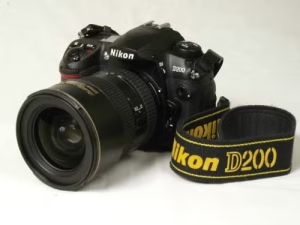
1. Nikon D200

Sensor: 10.2 MP APS-C CCD (23.6 × 15.8 mm)
Year of release: 2005

What it was in its day, and why it is still viable today

The D200 was not a revolutionary camera, but it was a very well-built piece of equipment at the time. A sealed magnesium alloy body with accessible physical controls and a reliability that made it a trusted companion for many press and nature photographers. Today, although surpassed in many technical areas, it still stands out for one clear reason: its CCD sensor produces some of the best colors ever seen in a digital SLR.

Ergonomics and real handling

When you hold a D200 for the first time, the first thing you notice is that it doesn’t try to look small or lightweight. It is a “serious,” solid camera with a deep grip and direct access buttons for ISO, white balance, metering mode, and image quality. There is no need to enter any menus to adjust the important settings. And the front and rear dials have that satisfying click you expect from a tool designed to last.

The optical viewfinder has good coverage (95%) and offers a clear, unadorned experience. The rear screen, however, is small (2 inches) and has modest resolution, but it’s sufficient for checking exposure and histogram. The interface is consistent, and anyone who has used a Nikon since 2000 will feel right at home.

Image quality

What makes the D200 a sought-after camera today is not its megapixels or shooting speed. It’s the color treatment. The CCD sensor, combined with Nikon’s image engine at the time, produces natural colors, with particular richness in skin tones, greens, and skies. Tonal transitions are smooth, without the exaggerated microcontrast seen in many modern RAW files.

And as I said before, it’s not a matter of nostalgia: there are photographers who still use it today precisely because they achieve that look with less post-production.

Technical limitations

It doesn’t record video, the ISO is usable up to 800, and any mobile phone today looks much better than the rear screen of this camera. The autofocus is acceptable for its time (Multi-CAM 1000 with 11 points), but limited if you’re coming from a modern mirrorless camera. Even so, it’s still perfectly functional for still photos and portraits.


title 002450 1000

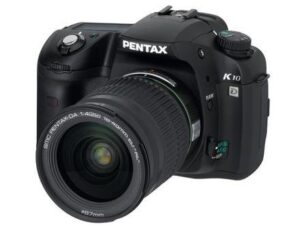
2. Pentax K10D

Sensor: 10.2 MP APS-C CCD
Year of release: 2006

Pentax, when it was Pentax

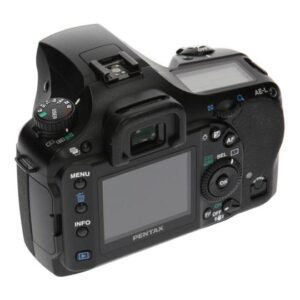
At the time, the K10D was Pentax’s bid to compete with Nikon and Canon in the semi-professional range. And it didn’t just come with good construction: it was one of the first SLRs to include stabilization in the body (yes, a stabilized SLR), weather sealing, and a quality pentaprism viewfinder. Although Pentax is nowhere near what it used to be today, this model is still a gem if you’re interested in the CCD look and a complete photographic experience.

Body and controls

The K10D has a clean and robust design. It’s not light (about 790 g with battery), but that helps stabilize it in your hand. The grip is comfortable, with well-placed buttons, two control dials, and a physical selector for customizable modes. Access to ISO, white balance, AF mode, and exposure compensation is direct, without the need to search through menus.

The rear screen is 2.5 inches with 210k dots, just enough but functional. The menu is more sober than on Nikon or Canon, but intuitive. The viewfinder, on the other hand, is a bright pentaprism with 95% coverage and 0.95x magnification, well above the average for its time (and still usable today).

Image and color

This is where this camera really shines. The K10D’s CCD, combined with Pentax’s PRIME engine, offers smooth, balanced color with a very “photographic” profile. There is no oversaturation or artificial contrast. It performs particularly well in RAW: the files are malleable, with no tendency to overexpose highlights. Many photographers agree that skin tones and greens are particularly pleasing.

It also performs well in direct JPEG, although it is in RAW that its capabilities can be best exploited. The dynamic range is not surprising in terms of figures (around 10 stops), but the way it falls in shadows is progressive, which makes it more usable.

Things to keep in mind

The autofocus has 11 points, which is slightly slower than the Nikon D200, but quite usable under normal conditions. The ISO is quite usable up to 800, although at 1600 you can get acceptable images with noise reduction. The stabilization in the body allows you to shoot at slower speeds without a tripod, which partly compensates for its low-light performance.


leicadigilux2 allround D Q NP 966962 MLU79011127098 092024 O

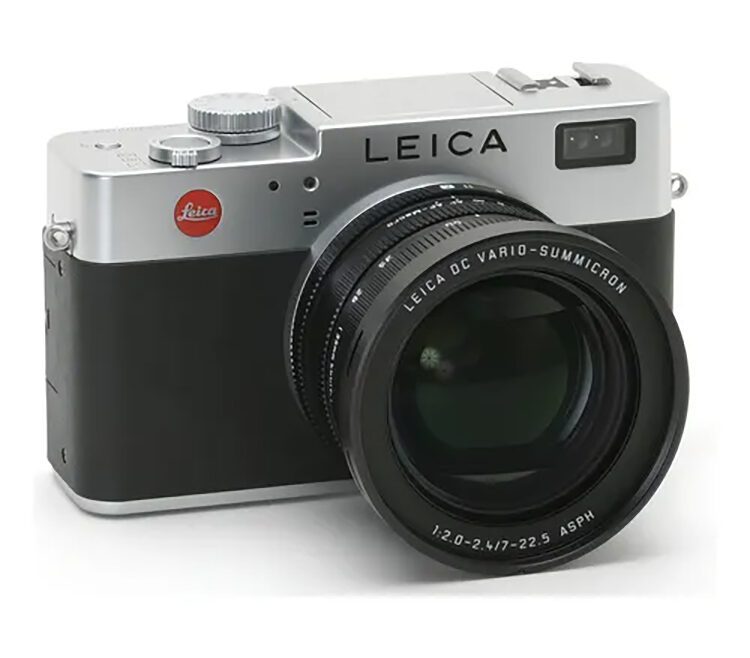
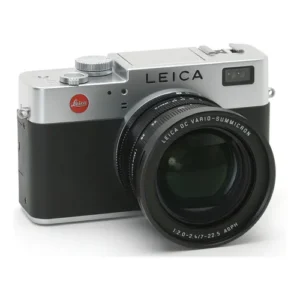
3. Leica Digilux 2

Sensor: 5 MP CCD (2/3”)
Fixed lens: Leica Vario-Summicron 28–90mm f/2–2.4
Year of release: 2004

Leica when it did strange things

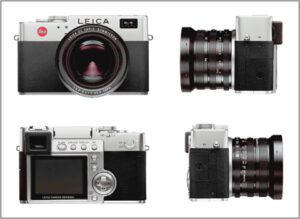
The Digilux 2 was an experiment by Leica with Panasonic. A compact digital camera, but with manual controls, a design reminiscent of the Leica M, and a built-in lens that is still considered one of the best ever mounted on a compact camera. And most surprising of all: a CCD sensor that, with only 5 MP and slightly larger than mobile phone sensors, nevertheless produces photos that are perfectly usable today.

Feel in your hand

The body is made of magnesium alloy, with a clean and sober design, as is typical of Leica. It has a physical dial for speed, controllable aperture from the lens, and manual focus with a real distance ring. It feels like an analog camera, both in operation and response. The electronic viewfinder is old (235k dots), but sufficient for composing. The rear LCD screen is 2.5 inches and works well outdoors.

There is no RAW, only JPEG. But the JPEGs that come out of this camera have a character of their own: warm color, restrained contrast, just the right amount of sharpness. And the lens, a bright Vario-Summicron, delivers sharpness from f/2 and soft bokeh in portraits.

And the limitations?

Everything. It’s slow, the autofocus is sluggish, there’s no video, no stabilization. But that doesn’t matter if you know what you’re looking for: a leisurely shooting experience with unique results.


71xKW2FDmL. UF8941000 QL80 450 1000

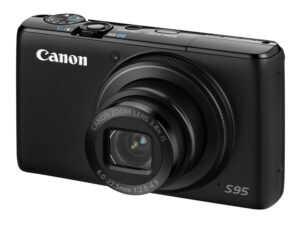
4. Canon PowerShot S95

Sensor: 10 MP 1/1.7″ CCD
Year of release: 2010

Canon’s serious compact

The S95 was one of the first compact cameras to offer full manual control, RAW recording, and a bright f/2 lens in a pocket-sized body. It wasn’t a professional camera, but many photographers used it as a second everyday camera. Today, its CCD sensor is still sought after by those who want that “filmic” look that many modern cameras have lost.

Build and usability

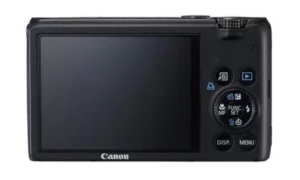
The camera is very small, fitting in a jacket pocket. It has a configurable front ring that can control aperture, ISO, or exposure compensation. The interface is simple, and although the rear screen is not touch-sensitive, it responds quickly. The body is plastic but well-assembled, with a clean, understated design.

Image quality

Despite having a small sensor, the CCD performs well in normal lighting conditions. Colors are soft, the automatic white balance is usually reliable, and RAW allows for precise adjustments. The lens, a 28–105mm f/2–4.9, is sharp in the center and quite decent in the corners up to 70mm.

In low light conditions, the maximum usable ISO is around 400; beyond that, noticeable chromatic noise appears. Even so, for portraits, street photography, or personal use, it offers a warm, natural image that is difficult to achieve with current mobile phones.


And finally… a video camera

a29a275b172945f69fa8b26dc687098d m66737880768 10

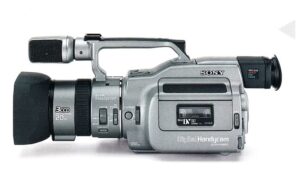
5. Sony DCR-VX1000

Sensor: 1/3” triple CCD
Year of release: 1995
Format: MiniDV

The standard for indie video in the 1990s

The VX1000 was revolutionary. It was the first MiniDV camcorder with professional optics, triple CCD sensor, and manual controls. And although today it only records in SD (720×480), its image remains iconic. If you’ve seen skate videos, alternative band clips, or experimental films from the late 90s, you’ve probably seen what this camera is capable of.

Handling and feel

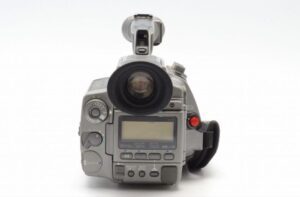
It’s not light or small. It’s brick-shaped, with a motorized zoom, manual focus wheel, audio inputs, and gain, exposure, and shutter controls. The viewfinder is electronic, with a monochrome screen. There is no rear LCD screen. It records to tape and captures via FireWire. Everything is physical, manual, and quite slow. But that’s part of the charm.

Aesthetics and current use

What this camera produces is unmistakable: saturated color, soft blacks, and a texture reminiscent of high-quality VHS. There are no simulations or filters that can fully replicate it. That’s why it’s still sought after for music videos, experimental pieces, and campaigns with a lo-fi aesthetic.


What conclusion can we draw?

There is no “best” camera on this list. They all have significant technical flaws, but they all offer something that is hard to find today: an image with its own character, with a unique aesthetic from the moment you shoot. If you are willing to work with these limitations, you will discover that often these limitations are what force you to think more carefully about each photo.

Want a solid, reliable SLR with Nikon color? Nikon D200.

Prefer something more alternative, with stabilization? Pentax K10D.

Looking for the Leica experience without emptying your wallet? Digilux 2.

Compact with RAW and a soft filmic look? Canon S95.

Or maybe you prefer retro video without LUTs or simulations? Sony VX1000.

They all have something to offer. None of them try to impress with their features, and they all force you to think before you shoot… which is no small thing.


What if you still want the filmic look but with a modern camera?

The closest and simplest option is Fujifilm with its film simulations, which allow you to get retro looks straight from the camera, without editing.

The latest: FUJIFILM X-E5 + FUJINON XF23MM f2.8 R WR: VER PRECIO

More affordable: FUJIFILM X-M5: VER PRECIO

The best of the brand with a retro design, dials, buttons, and selectors: FUJIFILM X-T5: VER PRECIO

Privacy Preferences

When you visit our website, it may store information through your browser from specific services, usually in the form of cookies. Here you can change your Privacy preferences. It is worth noting that blocking some types of cookies may impact your experience on our website and the services we are able to offer.

Click to enable/disable Google Analytics tracking code.
Click to enable/disable Google Fonts.
Click to enable/disable Google Maps.
Click to enable/disable video embeds.
Our website uses cookies, mainly from 3rd party services. Define your Privacy Preferences and/or agree to our use of cookies.
error: © EFEIGHT.com